I worked across four teams in the customer enablement space, My Southern Cross. Here I designed and maintained complex end-to-end user journeys which allowed policyholders to easily view, understand and manage their cover and claims. I also did work to streamline the design file ecosystem, and create flexible, scalable design systems for improved collaboration between teams.
WHAT WAS ACHIEVED
Increased visibility and findability of designs across teams & stakeholders.
Reduction in duplicated efforts through reusability.
Faster and more efficient handoffs & onboarding.
Established a standardized design pipeline to create a shared visual reference, enhancing collaboration across squads.
Created a shared understanding of the platform's current state
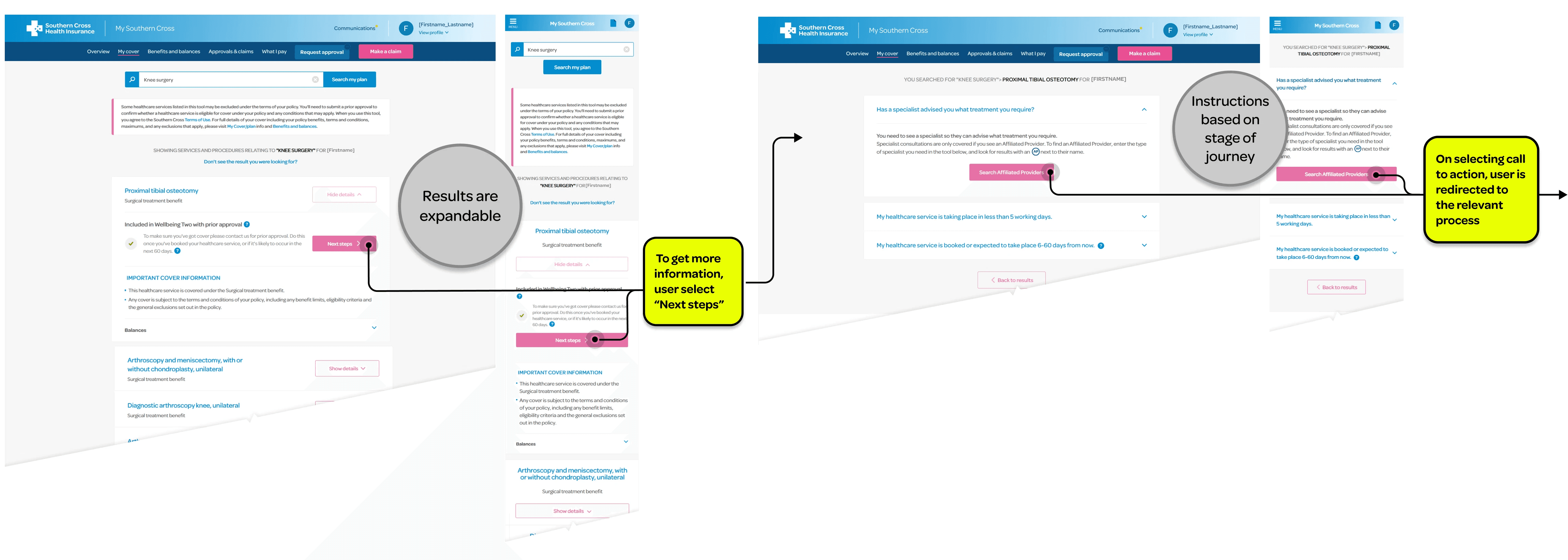
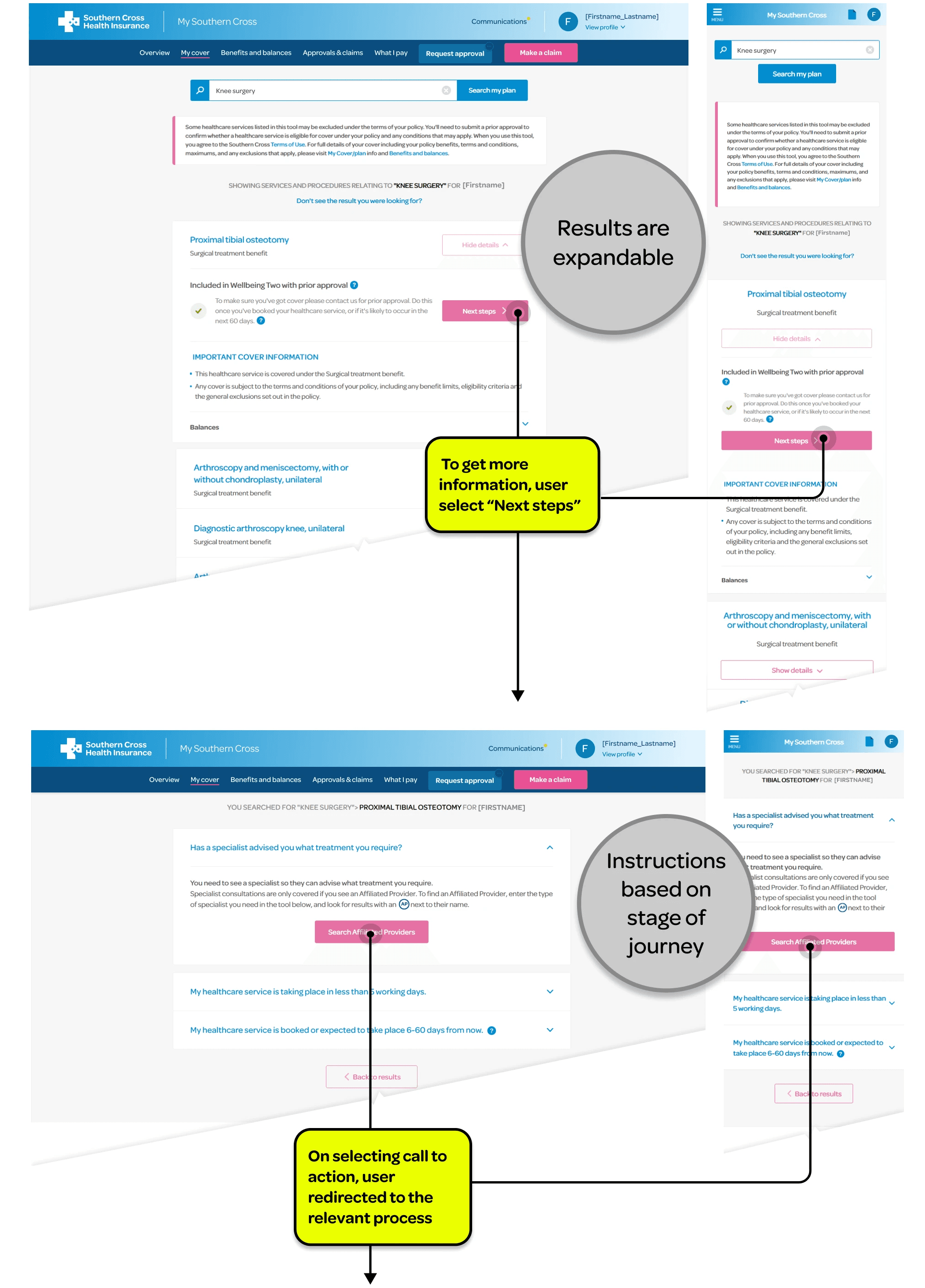
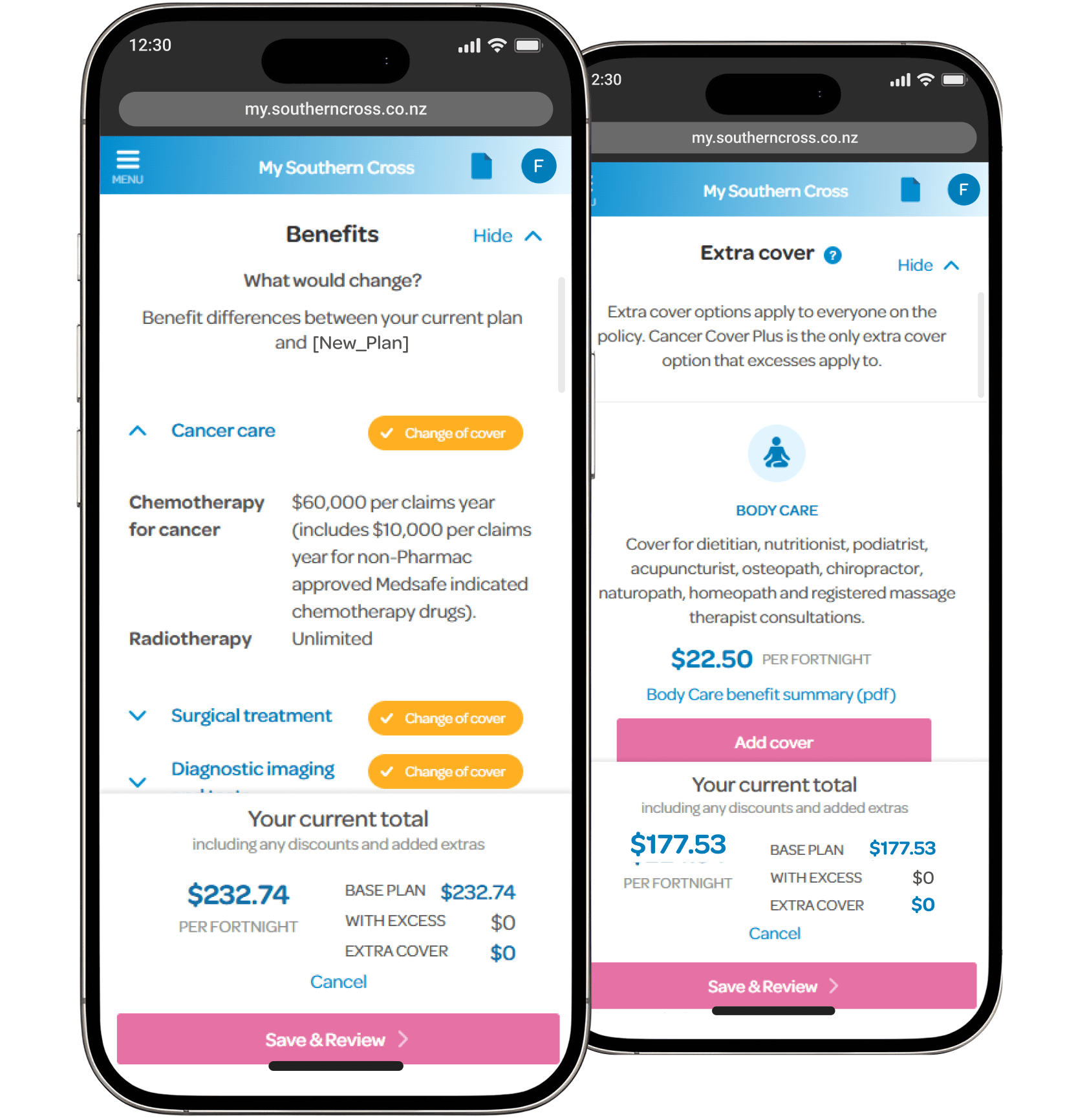
Changing health insurance cover is not a simple settings update. Members need to understand who is covered, what benefits change, how excess choices affect premiums, and when a decision could have financial consequences.
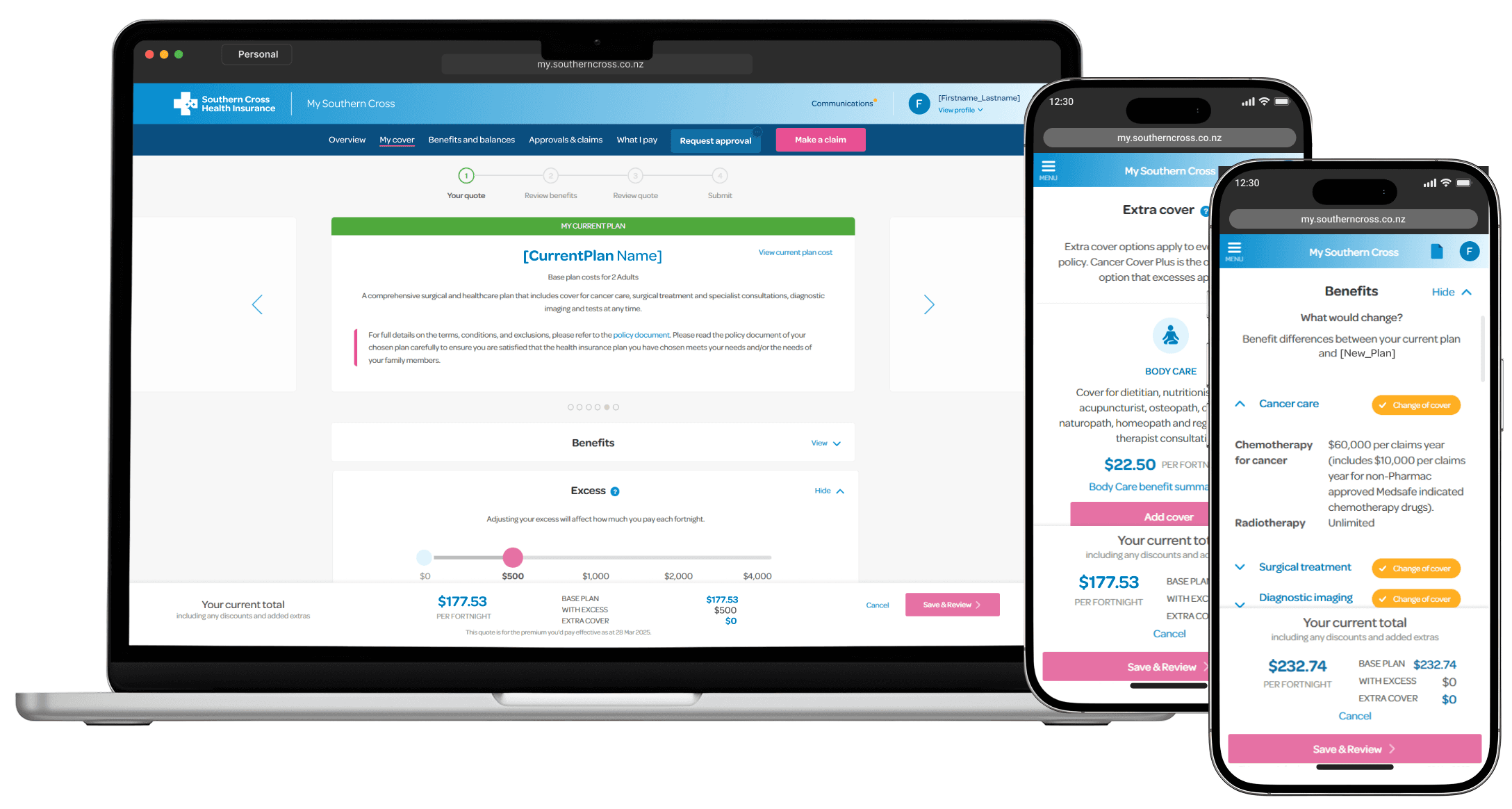
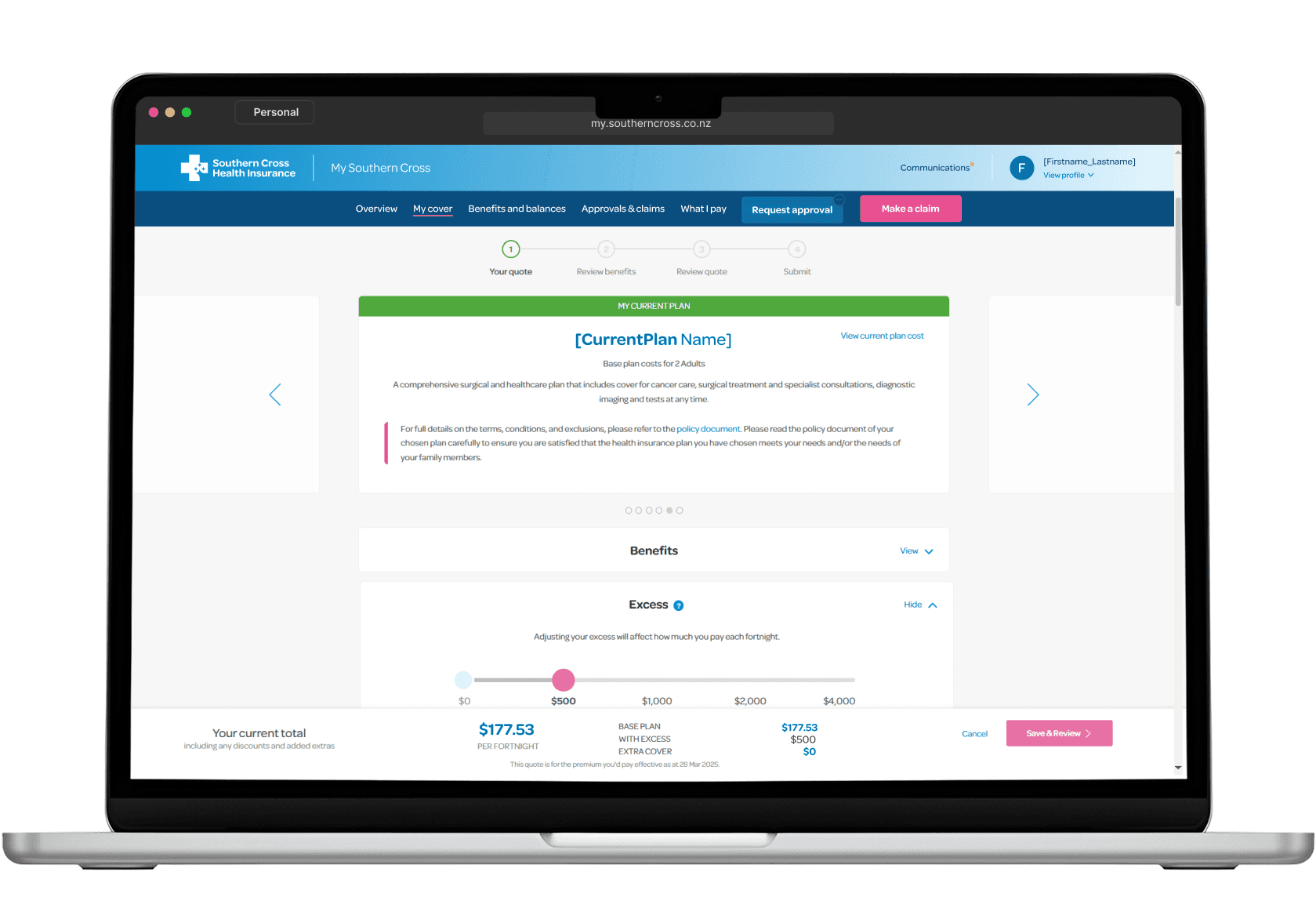
The Manage My Cover flow organised that complexity into four steps and kept the cost maths visible at decision points. Dense benefit information was still present, but structured so members could compare, review, and submit without needing to call for every policy adjustment.
WHAT WAS ACHIEVED
Designed for policy changes including adding and removing insured people.
Helped reduce churn and call volumes.
Balanced content-heavy insurance screens with progressive review and clear totals.
Some insurance tasks still need human help. The product opportunity was to make that help easier to reach at the moment of friction, without forcing members to abandon the logged-in journey or repeat context elsewhere.
Click to Contact surfaced support options, callback requests, and queue confirmation inside the portal experience. A second phase extended the pattern into urgent and high-friction flows so help could appear in situ, not only in a general help area.
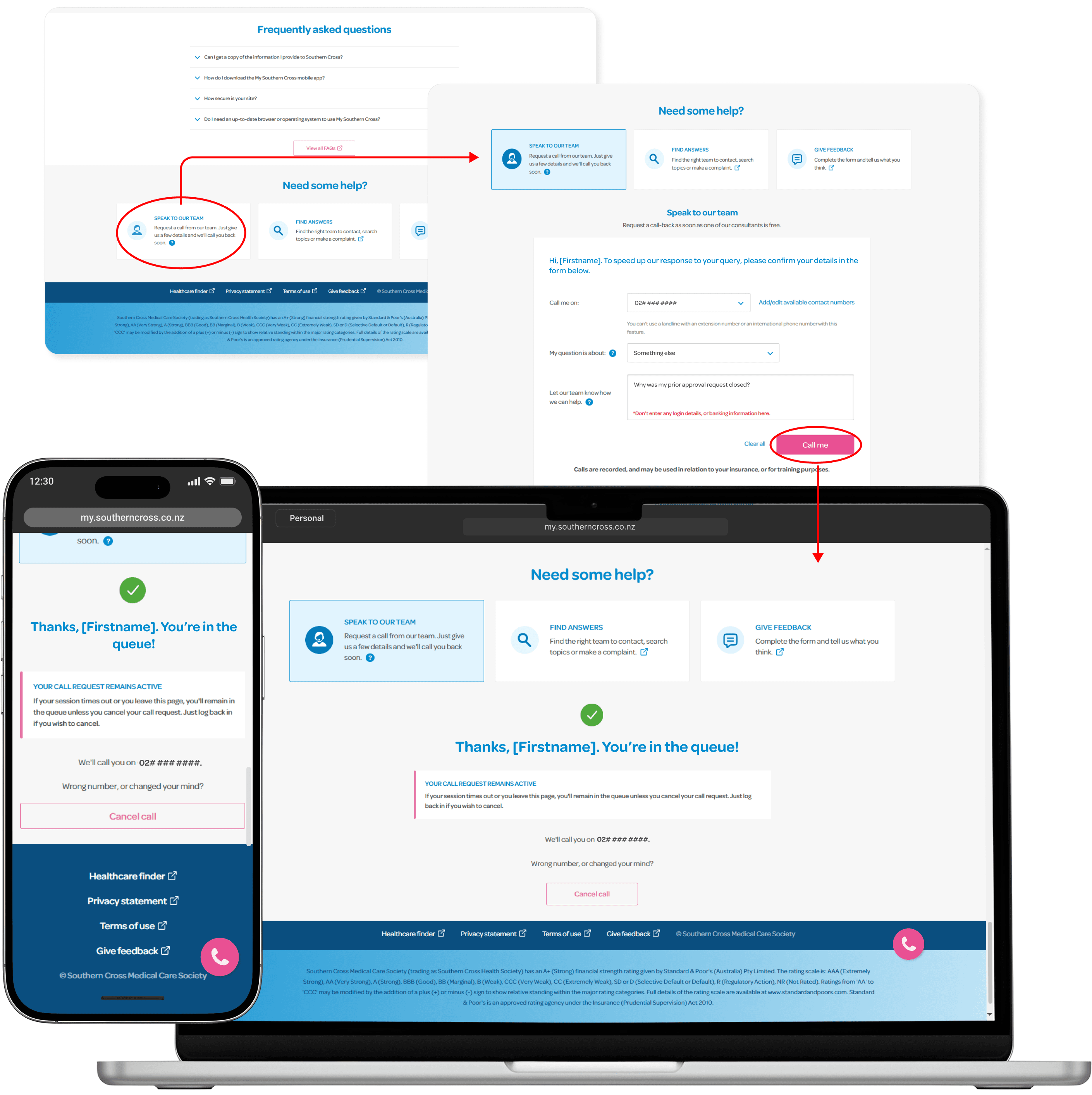
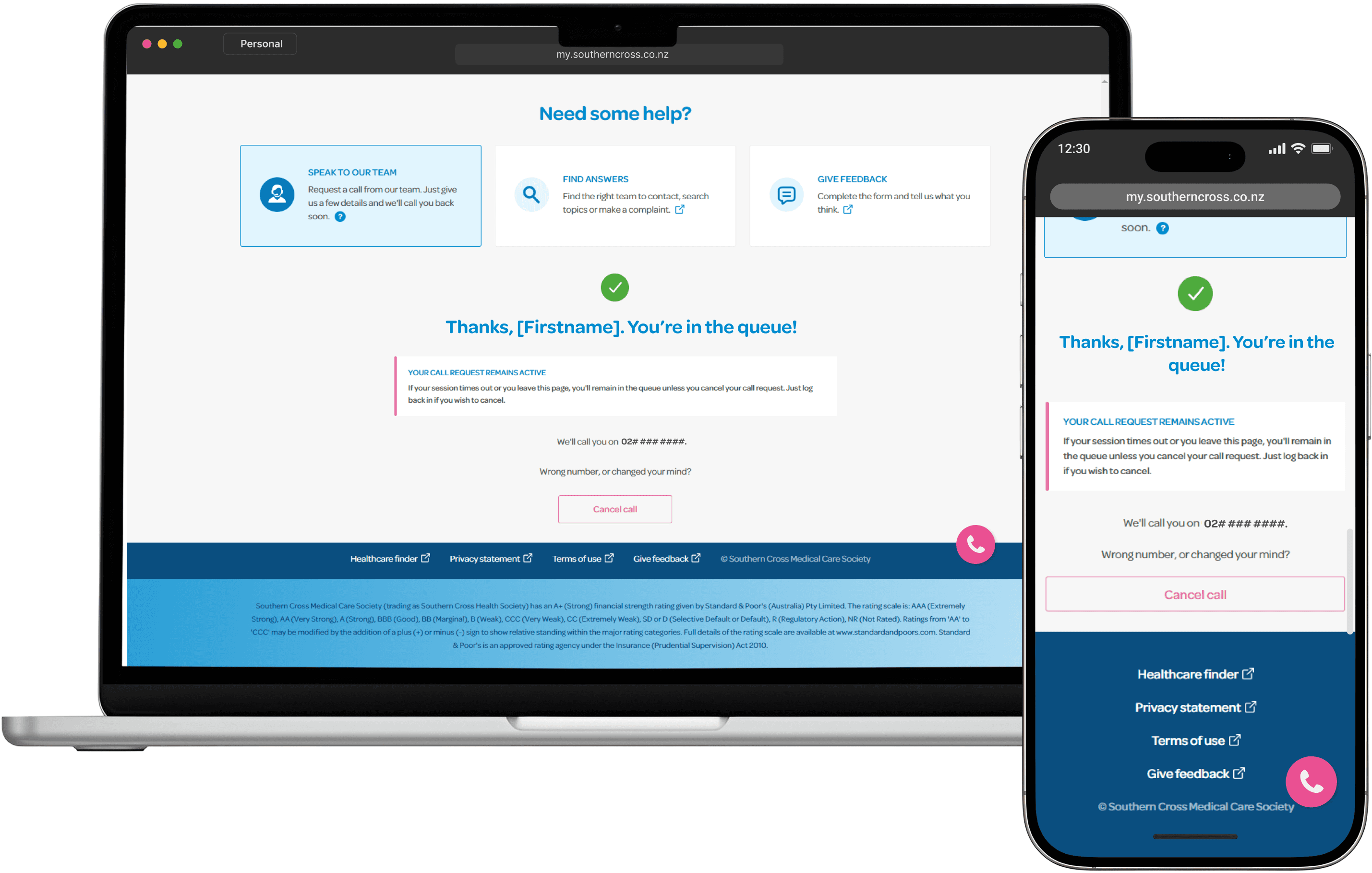
Contextual help paired contact choices with callback status, giving members a faster route to support without leaving the portal context.
WHAT WAS ACHIEVED
Improved speed-to-answer and call completion outcomes.
Callback functionality connected through Addons and other internal systems integrations.
Help choices were designed as part of the member journey, not as a detached support page.